Introduction
A few years ago, many small business owners believed automation was something only large corporations could afford. If you wanted to automate customer service, manage marketing campaigns, or analyze business data, you often needed expensive software and dedicated teams.
That reality has changed dramatically.
Recently, I spoke with a small online store owner who manages most of his business with the help of AI-powered tools. Tasks that once took several hours each day—such as responding to customer inquiries, scheduling content, and organizing emails—are now handled in minutes.
What impressed me wasn’t the technology itself. It was the amount of time it gave back to the business owner.
Instead of spending the entire day on repetitive work, he could focus on growth, customer relationships, and business strategy.
This is exactly why AI automation has become one of the biggest business trends in 2026.
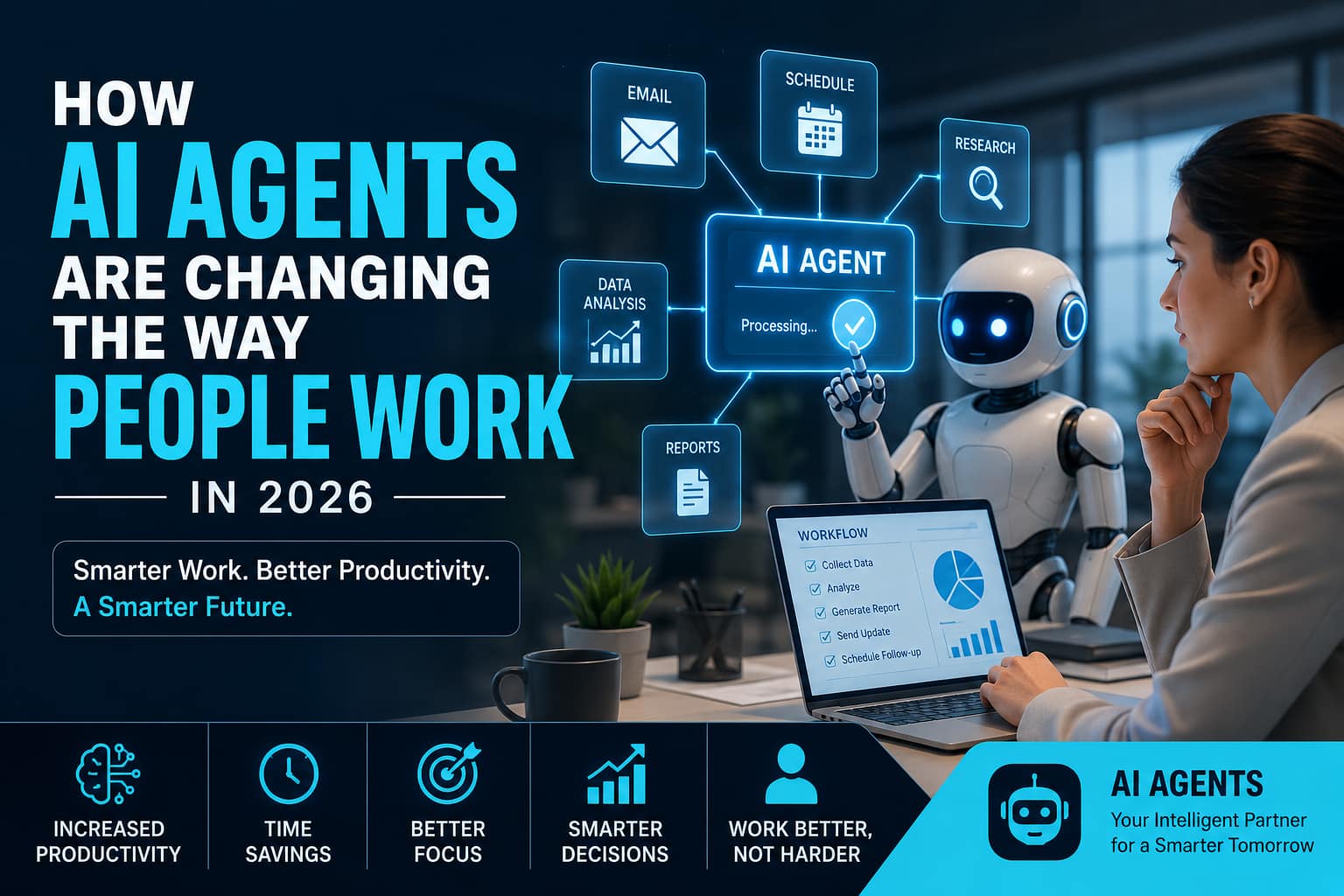
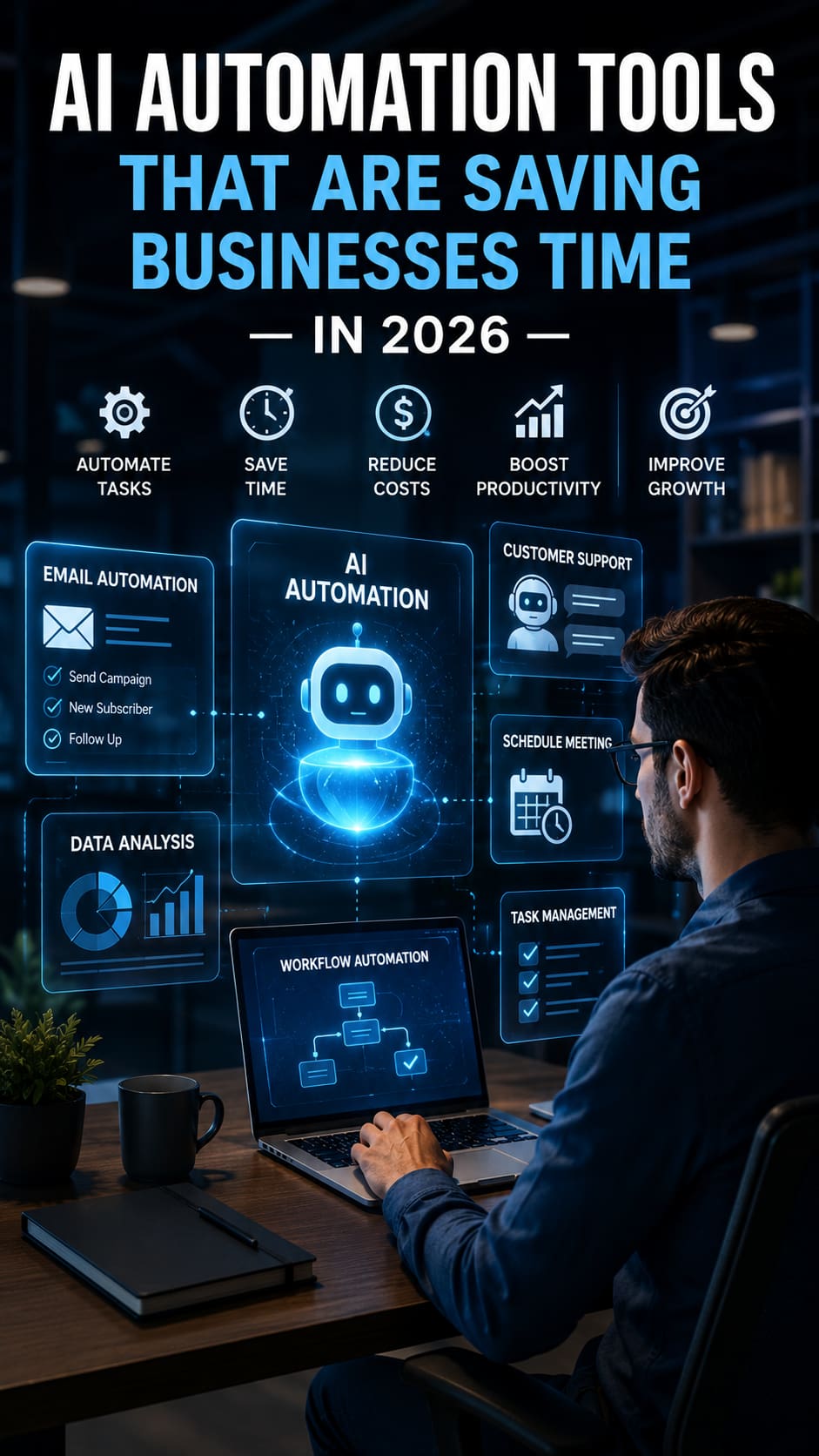
Businesses of every size are using artificial intelligence to automate routine tasks, improve efficiency, reduce costs, and increase productivity. From customer support to content creation, AI automation tools are helping companies achieve more with fewer resources.
Let’s explore how these tools are changing the way businesses operate and which areas are benefiting the most.
Why Businesses Are Embracing AI Automation
Running a business involves hundreds of small tasks.
Emails need responses. Appointments need scheduling. Customers need support. Reports need analysis. Marketing campaigns need monitoring.
Individually, these tasks may not seem overwhelming.
Combined, they consume a significant amount of time.
This is where AI automation becomes valuable.
Instead of manually handling repetitive activities, businesses can use AI-powered systems to perform many of these tasks automatically.
The result is simple:
- More efficiency
- Faster workflows
- Reduced operational costs
- Better customer experiences
One thing I’ve consistently observed is that businesses often don’t struggle because of a lack of ideas. They struggle because they spend too much time on routine work.
AI automation helps solve that problem.
Customer Support Automation Is Becoming Smarter
Customer support has traditionally required significant human effort.
Businesses must answer questions, resolve issues, process requests, and provide assistance throughout the day.
AI-powered customer support tools are making this process much more efficient.
Modern AI chatbots can:
- Answer common questions
- Provide order updates
- Assist customers 24/7
- Route complex issues to human agents
For customers, this means faster responses.
For businesses, it means reduced workload and improved service quality.
The goal isn’t to replace human support teams entirely. Instead, AI handles routine requests while employees focus on situations that require personal attention.
AI Email Management Saves Valuable Time
Most professionals spend a surprising amount of time managing email.
Reading messages, organizing inboxes, responding to routine requests, and scheduling follow-ups can consume several hours every week.
AI-powered email assistants are helping reduce this burden.
These tools can:
- Sort incoming emails
- Prioritize important messages
- Draft responses
- Schedule follow-ups
- Identify urgent requests
For busy entrepreneurs and managers, this can significantly improve productivity.
Instead of constantly checking email, they can focus on higher-value work.
Content Creation Is Faster Than Ever
Content marketing remains one of the most important growth strategies for modern businesses.
However, creating content consistently can be challenging.
Blog articles, social media posts, newsletters, product descriptions, and marketing materials require time and effort.
AI content tools are helping businesses accelerate this process.
Companies now use AI to:
- Generate content ideas
- Create outlines
- Draft marketing copy
- Improve writing quality
- Repurpose existing content
Of course, human editing remains important.
The most successful businesses use AI as an assistant rather than a complete replacement for creativity.
When combined with human expertise, AI can dramatically speed up content production.
AI Scheduling Tools Improve Organization
Scheduling meetings can become surprisingly complicated.
Finding available times, sending invitations, managing calendars, and handling changes often creates unnecessary administrative work.
AI scheduling tools simplify the process.
These systems can:
- Coordinate calendars
- Suggest meeting times
- Send reminders
- Reschedule appointments automatically
For businesses with busy teams, this creates significant time savings.
Small improvements in scheduling can eliminate dozens of administrative tasks each month.
Marketing Automation Is Becoming More Effective
Marketing involves many repetitive activities.
Businesses need to:
- Send emails
- Publish social media content
- Monitor campaigns
- Track performance
- Analyze customer behavior
AI marketing tools can automate much of this process.
For example, an AI system can analyze customer interactions and determine the best time to send promotional emails.
It can also recommend content topics based on audience interests.
This helps businesses improve marketing performance while reducing manual effort.
Data Analysis Without Complex Spreadsheets
Businesses generate enormous amounts of data.
Unfortunately, many business owners don’t have time to analyze it properly.
AI analytics tools make data easier to understand.
Instead of manually reviewing spreadsheets, businesses can receive:
- Automated reports
- Performance summaries
- Trend analysis
- Customer insights
- Revenue forecasts
This allows decision-makers to act quickly and confidently.
In many cases, better decisions come from having clearer information, not necessarily more information.
Small Businesses Are Benefiting the Most
Many people assume AI automation is mainly for large corporations.
In reality, small businesses may benefit even more.
Large companies often have dedicated teams for administration, marketing, and customer support.
Small businesses usually don’t.
When a small business automates repetitive tasks, the impact can be significant.
A business owner who saves two hours every day gains more than sixty hours each month.
That’s valuable time that can be invested in growth, customer service, and innovation.
Common Mistakes Businesses Make With AI Automation
Despite its advantages, AI automation is not perfect.
Some businesses make mistakes when implementing automation tools.
Automating Too Much Too Quickly
Not every process should be automated immediately.
It’s often better to start with simple tasks and expand gradually.
Ignoring Human Oversight
AI systems still require monitoring.
Human review remains important for quality control and customer satisfaction.
Choosing Too Many Tools
Using multiple overlapping automation platforms can create confusion.
A few well-selected tools are usually more effective than dozens of disconnected systems.
What the Future Looks Like
AI automation is still evolving.
Experts expect future tools to become:
- More intelligent
- More personalized
- More accurate
- Easier to use
Businesses that adopt automation strategically will likely gain significant competitive advantages over the coming years.
However, the future isn’t about replacing people.
It’s about allowing people to focus on work that requires creativity, judgment, problem-solving, and human connection.
The companies that balance automation with human expertise will probably see the greatest success.
FAQ
1. What is AI automation?
AI automation uses artificial intelligence to perform tasks automatically without constant human involvement.
2. Can small businesses benefit from AI automation?
Yes. Small businesses often benefit the most because automation reduces workload and saves valuable time.
3. Does AI automation replace employees?
Not necessarily. Most businesses use AI to handle repetitive tasks while employees focus on higher-value work.
4. Which business areas can be automated?
Customer support, email management, scheduling, marketing, content creation, and data analysis are common examples.
5. Is AI automation expensive?
Many AI tools now offer affordable plans, making automation accessible to businesses of all sizes.
Conclusion
AI automation is no longer a future concept. It is already transforming businesses in 2026.
From customer support and email management to marketing and analytics, AI tools are helping companies save time, improve efficiency, and focus on growth.
The biggest advantage isn’t simply automation itself. It’s the opportunity to spend less time on repetitive work and more time on meaningful business activities.
Businesses that use AI thoughtfully can create better experiences for customers while building stronger and more efficient operations.
Suggested Cross Links
- Yentice.me article: Best Free Productivity Apps Worth Using in 2026
- MegaDealsHub24: Relevant AI software deals, productivity tools, or business software resources
About the Author