Introduction
A few years ago, smart home technology was often considered a luxury. Many people assumed they needed a large budget to automate their homes, install smart devices, and enjoy modern convenience.
Today, that’s no longer true.
Recently, a friend wanted to make his home smarter but didn’t want to spend hundreds of dollars on expensive gadgets. He started with a simple smart bulb and a smart plug. Within a few weeks, he had automated lighting, controlled devices from his phone, and even reduced energy waste.
The surprising part was how affordable everything had become.
In 2026, smart home technology is more accessible than ever. Many budget-friendly devices now offer features that were once only available in premium systems. From smart lighting and security devices to voice assistants and energy-saving gadgets, homeowners can create a smarter living space without spending a fortune.
If you’re looking to upgrade your home on a budget, these smart home devices are worth considering.
What Makes a Smart Home Device Worth Buying?
Before purchasing any smart gadget, it’s important to understand what makes a device valuable.
The best smart home devices usually provide:
- Convenience
- Energy efficiency
- Improved security
- Easy setup
- Reliable performance
A device doesn’t need to be expensive to deliver these benefits.
In fact, some of the most useful smart home products are also among the most affordable.
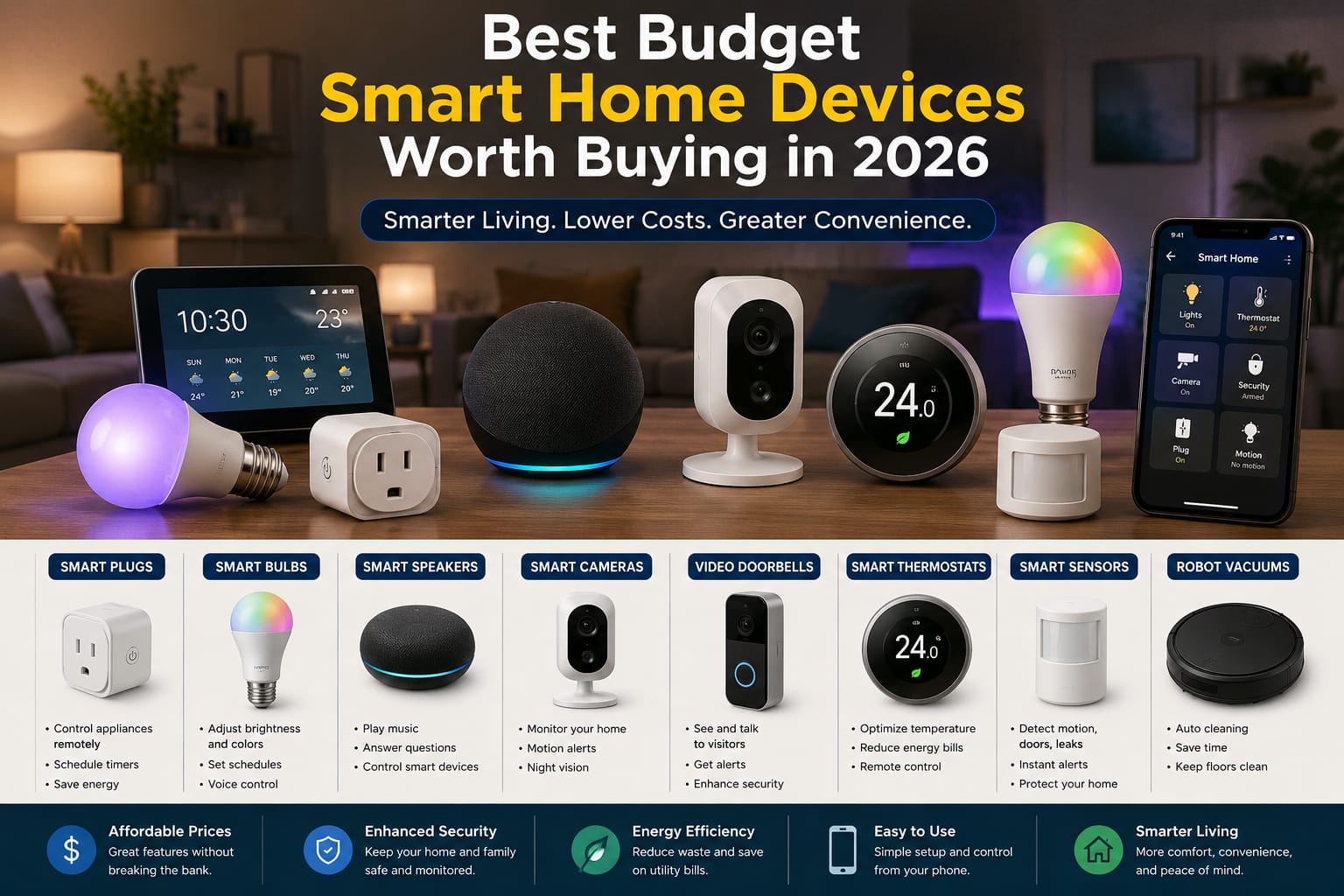
Smart Plugs: Small Device, Big Benefits
Smart plugs are often one of the first smart home devices people buy.
They allow users to control traditional appliances through a smartphone app or voice assistant.
Practical Uses
- Turn lights on and off remotely
- Schedule coffee makers
- Control fans
- Manage holiday lighting
- Reduce energy waste
One of the biggest advantages is simplicity. Most smart plugs can be installed within minutes.
For a relatively small investment, they add a surprising amount of convenience.
Smart LED Bulbs
Smart lighting remains one of the most popular smart home upgrades.
Modern smart bulbs allow users to:
- Control brightness
- Change colors
- Schedule lighting
- Use voice commands
- Manage lights remotely
Besides convenience, smart lighting can help reduce electricity consumption.
Many users also appreciate the ability to create different lighting environments for work, relaxation, or entertainment.
Smart Speakers and Voice Assistants
Voice assistants continue to improve every year.
Budget-friendly smart speakers can help users:
- Play music
- Set reminders
- Control smart devices
- Check weather updates
- Answer questions
For many households, voice assistants become the central hub of the smart home.
They make it easier to manage multiple devices without constantly opening smartphone apps.
Smart Security Cameras
Home security remains a major concern for many homeowners.
Fortunately, affordable smart security cameras have become widely available.
Modern cameras offer features such as:
- Motion detection
- Mobile notifications
- Night vision
- Cloud storage options
- Live video streaming
Even entry-level models can provide valuable peace of mind.
For people who travel frequently or want to monitor deliveries, smart cameras can be especially useful.
Video Doorbells
Video doorbells have become increasingly popular.
They allow homeowners to:
- See visitors remotely
- Receive motion alerts
- Communicate through mobile apps
- Monitor package deliveries
One practical benefit is improved security.
Even when you’re away from home, you can see who’s at your door and respond if necessary.
Many budget-friendly options now offer features previously found only in premium models.
Smart Thermostats
Heating and cooling often account for a large portion of household energy costs.
Smart thermostats help manage temperature more efficiently.
Benefits Include
- Energy savings
- Automatic scheduling
- Remote control
- Usage tracking
- Improved comfort
While some advanced models can be expensive, affordable options are becoming more common.
Over time, energy savings may even offset the initial purchase cost.
Smart Home Sensors
Smart sensors are often overlooked but can be extremely useful.
Common examples include:
- Door sensors
- Window sensors
- Motion sensors
- Water leak detectors
These devices help improve both convenience and security.
For example, a water leak sensor can alert homeowners before a small leak becomes a major problem.
Early detection can save significant repair costs.
Smart Robot Vacuums
Robot vacuums have become much more affordable in recent years.
Budget-friendly models can now:
- Clean floors automatically
- Follow schedules
- Navigate rooms
- Return to charging stations
While premium models offer additional features, many affordable versions provide excellent value.
For busy families, this automation can save considerable time each week.
Smart Home Hubs: Do You Need One?
Many beginners wonder whether a smart home hub is necessary.
The answer depends on the devices being used.
Some ecosystems work well without a dedicated hub because devices connect directly through Wi-Fi.
However, a hub can simplify management when multiple devices from different manufacturers are involved.
For beginners, starting without a hub is often the easiest approach.
Practical Tips Before Buying Smart Home Devices
Start Small
You don’t need to automate your entire home immediately.
Begin with one or two devices and expand gradually.
Check Compatibility
Make sure devices work with your preferred ecosystem and voice assistant.
Read Reviews
Real user experiences often reveal strengths and weaknesses that marketing materials overlook.
Focus on Useful Features
Buy devices that solve real problems rather than simply adding technology for its own sake.
The best smart home upgrades are the ones that genuinely improve daily life.
Common Mistakes to Avoid
Buying Too Many Devices at Once
Starting slowly helps prevent compatibility and setup issues.
Ignoring Security Settings
Always change default passwords and enable available security features.
Choosing Based Only on Price
The cheapest device is not always the best value.
Balance affordability with reliability and features.
FAQ
1. Are smart home devices expensive?
Not necessarily. Many useful smart home devices are available at budget-friendly prices.
2. Which smart home device should beginners buy first?
Smart plugs and smart bulbs are often the easiest and most affordable starting points.
3. Can smart home devices save money?
Yes. Devices such as smart thermostats and smart lighting can help reduce energy consumption.
4. Are smart home devices secure?
Most modern devices are secure when users follow recommended security practices and update software regularly.
5. Do smart home devices require professional installation?
Many budget-friendly devices are designed for easy self-installation.
Conclusion
Smart home technology is no longer reserved for expensive luxury homes. In 2026, affordable smart devices are helping homeowners improve convenience, security, and energy efficiency without spending large amounts of money.
Whether you start with a smart plug, a smart speaker, or a security camera, even small upgrades can make a noticeable difference in daily life.
The key is to focus on practical devices that solve real problems and provide genuine value.
A smarter home doesn’t have to cost a fortune.
Related Resources
Yentice.me
https://yentice.me/
MegaDealsHub24
https://megadealshub24.blogspot.com/?m=1
About the Author