Introduction
A few months ago, a friend received what looked like a completely normal email from his bank. The logo looked real, the message sounded professional, and everything seemed legitimate. Without thinking twice, he clicked the link and entered his login information.
A few minutes later, he realized something was wrong.
The email wasn’t from his bank at all. It was a phishing attack designed to steal personal information.
Unfortunately, stories like this are becoming increasingly common. As technology advances, cybercriminals are becoming smarter, faster, and more sophisticated. The internet has made life easier in many ways, but it has also created new security risks that affect individuals, businesses, students, and families.
The most important thing every internet user should know in 2026 is this:
Cybersecurity is no longer just an IT issue. It is a personal responsibility.
Understanding the most common cybersecurity threats can help protect your personal information, financial accounts, devices, and online identity.
In this article, we’ll explore the biggest cybersecurity threats in 2026, how they work, and the practical steps you can take to stay safe online.
Why Cybersecurity Matters More Than Ever
The average person now spends a significant portion of their day online.
People use the internet for:
- Banking
- Shopping
- Education
- Social media
- Entertainment
- Business
- Communication
Every online activity creates potential opportunities for cybercriminals.
As more devices become connected and more personal information is stored digitally, cybersecurity becomes increasingly important.
The good news is that most cyber threats can be reduced by understanding the risks and following basic security practices.
Phishing Attacks Are Becoming More Advanced
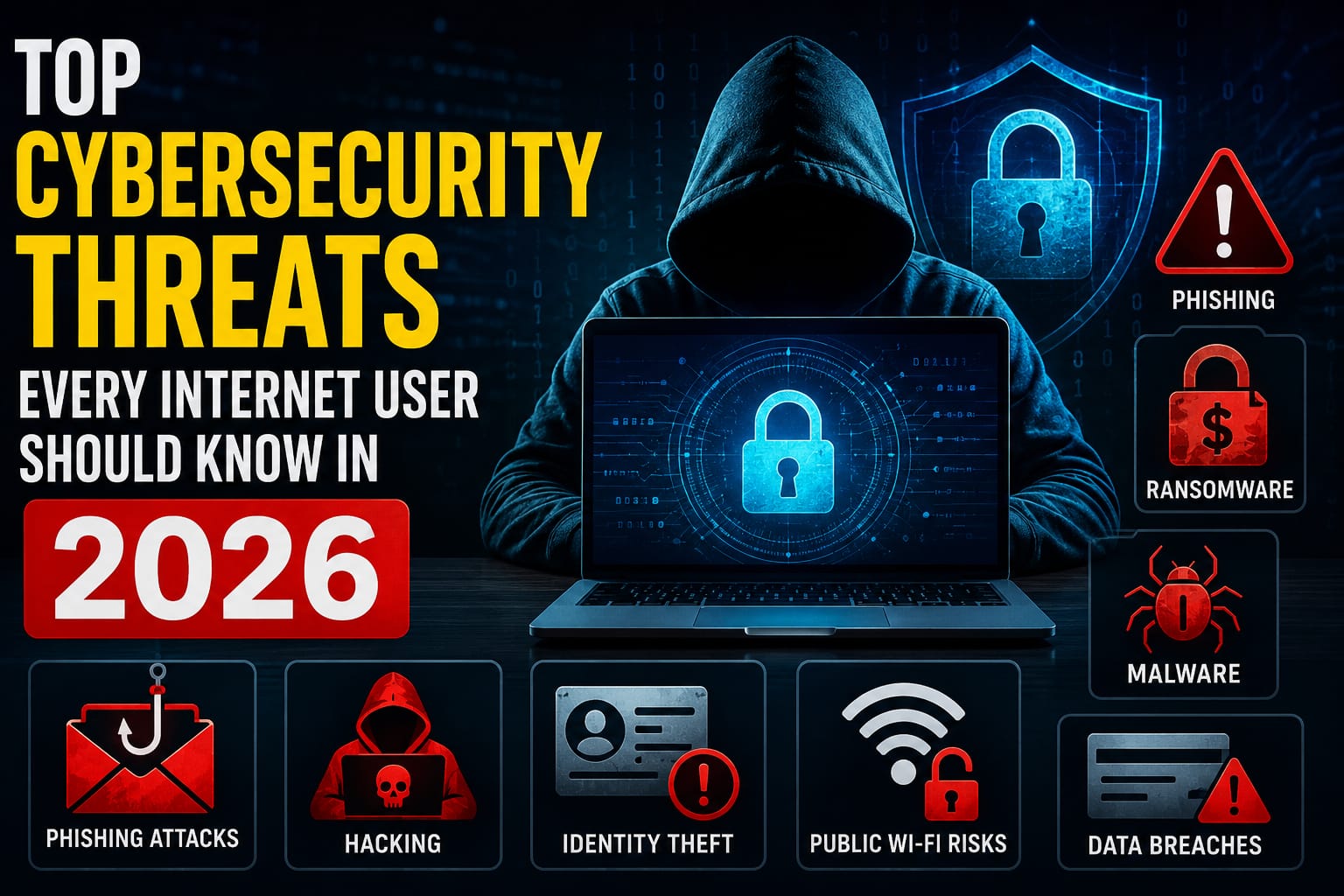
Phishing remains one of the most common cybersecurity threats in 2026.
A phishing attack occurs when criminals attempt to trick users into sharing sensitive information such as:
- Passwords
- Banking details
- Personal information
- Credit card numbers
Modern phishing attacks are becoming harder to detect.
Many fake emails and websites now look nearly identical to legitimate ones.
How to Protect Yourself
- Verify website URLs carefully
- Avoid clicking suspicious links
- Double-check email senders
- Enable multi-factor authentication
A good rule is simple: if something feels urgent or suspicious, verify it before taking action.
AI-Powered Cyber Attacks Are Increasing
Artificial intelligence is helping businesses improve efficiency, but cybercriminals are also using AI.
AI-powered attacks can:
- Generate convincing scam messages
- Automate phishing campaigns
- Analyze vulnerabilities faster
- Create realistic fake content
This makes cyber threats more personalized and difficult to identify.
One concerning trend is the rise of highly targeted scams that use publicly available information to appear more trustworthy.
The best defense remains awareness and caution.
Data Breaches Continue to Expose Personal Information
Data breaches occur when unauthorized individuals gain access to sensitive information stored by organizations.
When a breach happens, exposed information may include:
- Names
- Email addresses
- Passwords
- Phone numbers
- Financial information
Many people assume they are not important enough to become targets.
However, cybercriminals often focus on collecting large amounts of information from thousands or even millions of users.
Practical Tip
Regularly change passwords and avoid using the same password across multiple accounts.
This simple habit can significantly reduce risk.
Ransomware Attacks Remain a Serious Threat
Ransomware is a type of malicious software that locks files or systems until a payment is made.
Businesses are frequent targets, but individuals can also be affected.
Victims may lose access to:
- Documents
- Photos
- Business data
- Personal files
In many cases, paying the ransom does not guarantee recovery.
How to Stay Protected
- Keep software updated
- Use reliable security software
- Back up important files regularly
- Avoid downloading unknown attachments
Regular backups remain one of the most effective defenses against ransomware.
Fake Websites Are Becoming More Convincing
Cybercriminals often create websites that closely resemble legitimate businesses.
These fake websites are designed to steal:
- Login credentials
- Payment information
- Personal data
Some fake websites differ from real websites by only one letter in the web address.
This makes them easy to overlook.
Warning Signs
- Strange URLs
- Poor grammar
- Unexpected payment requests
- Missing security certificates
Always verify websites before entering sensitive information.
Public Wi-Fi Risks Still Exist
Free public Wi-Fi networks are convenient, but they can also create security risks.
Cybercriminals may use unsecured networks to intercept data or monitor online activity.
Common locations include:
- Cafes
- Airports
- Hotels
- Shopping centers
Best Practices
- Avoid online banking on public Wi-Fi
- Use secure websites
- Consider a VPN when traveling
- Disable automatic network connections
A few simple precautions can greatly improve security.
Password Security Is More Important Than Ever
Weak passwords continue to be one of the biggest cybersecurity problems.
Many people still use simple passwords that are easy to guess.
Examples include:
- 123456
- Password
- Birth dates
- Names
Cybercriminals can often crack weak passwords within seconds.
Strong Password Tips
- Use long passwords
- Include numbers and symbols
- Avoid personal information
- Use a password manager
Strong passwords remain one of the simplest and most effective security measures.
Social Engineering Attacks Target Human Behavior
Not all cyber attacks rely on technology.
Many attacks target human psychology.
This technique is known as social engineering.
Attackers manipulate people into sharing information or granting access voluntarily.
Examples include:
- Fake support calls
- Urgent requests
- Impersonation scams
- Fake job offers
Cybersecurity experts often say that people are the first line of defense.
Being cautious can prevent many attacks before they begin.
Practical Cybersecurity Habits Everyone Should Follow
Cybersecurity doesn’t require advanced technical knowledge.
Simple habits can significantly improve online safety.
Enable Multi-Factor Authentication
This adds an extra layer of protection to accounts.
Keep Software Updated
Updates often contain important security improvements.
Verify Before You Click
Take a few seconds to confirm links and messages.
Back Up Important Data
Regular backups reduce the impact of cyber incidents.
Monitor Account Activity
Checking accounts regularly helps identify suspicious activity early.
These small actions can prevent major problems.
The Future of Cybersecurity
Cybersecurity will continue evolving alongside technology.
Future security systems will likely use:
- Artificial intelligence
- Advanced threat detection
- Behavioral analysis
- Automated protection systems
However, technology alone cannot eliminate cyber risks.
Human awareness will remain essential.
The safest internet users are often those who stay informed and practice good security habits consistently.
FAQ
1. What is the biggest cybersecurity threat in 2026?
Phishing remains one of the biggest threats because it targets individuals directly and continues to become more sophisticated.
2. How can I protect my online accounts?
Use strong passwords, enable multi-factor authentication, and avoid sharing login information.
3. Is public Wi-Fi safe to use?
Public Wi-Fi can be risky. Avoid accessing sensitive accounts unless additional security measures are used.
4. What should I do if I receive a suspicious email?
Do not click links or download attachments. Verify the sender and contact the organization directly if necessary.
5. Why are data breaches dangerous?
Data breaches can expose personal information that criminals may use for fraud, identity theft, or financial scams.
Conclusion
Cybersecurity is no longer something only businesses need to worry about. Every internet user faces potential risks in today’s connected world.
From phishing scams and ransomware attacks to fake websites and data breaches, cyber threats continue to evolve rapidly. Fortunately, understanding these threats and following basic security practices can dramatically reduce risk.
The internet offers incredible opportunities, but staying safe online requires awareness, caution, and responsibility.
The more informed you are, the better prepared you’ll be to protect your information, your accounts, and your digital life.
Related Resources
Yentice.me
https://yentice.me/
About the Author