Introduction
For decades, technology companies have tried to create devices that could blend the digital world with everyday life. Smartphones changed how we communicate. Smartwatches brought technology to our wrists. Now, smart glasses are aiming to become the next major innovation.
Just a few years ago, smart glasses seemed like a futuristic concept that belonged in science fiction movies. Early versions often looked bulky, had limited functionality, and struggled to attract mainstream consumers.
In 2026, however, things are different.
Advances in artificial intelligence, augmented reality, battery technology, and lightweight hardware have made smart glasses more practical than ever before. Major technology companies are investing billions of dollars into developing devices that could eventually become as common as smartphones.
The big question is simple:
Are smart glasses truly the next big tech revolution, or are they still a niche gadget for technology enthusiasts?
Let’s explore what smart glasses can do, their advantages, limitations, and whether they have the potential to transform everyday life.
What Are Smart Glasses?
Smart glasses are wearable devices that look similar to traditional eyeglasses but include advanced technology.
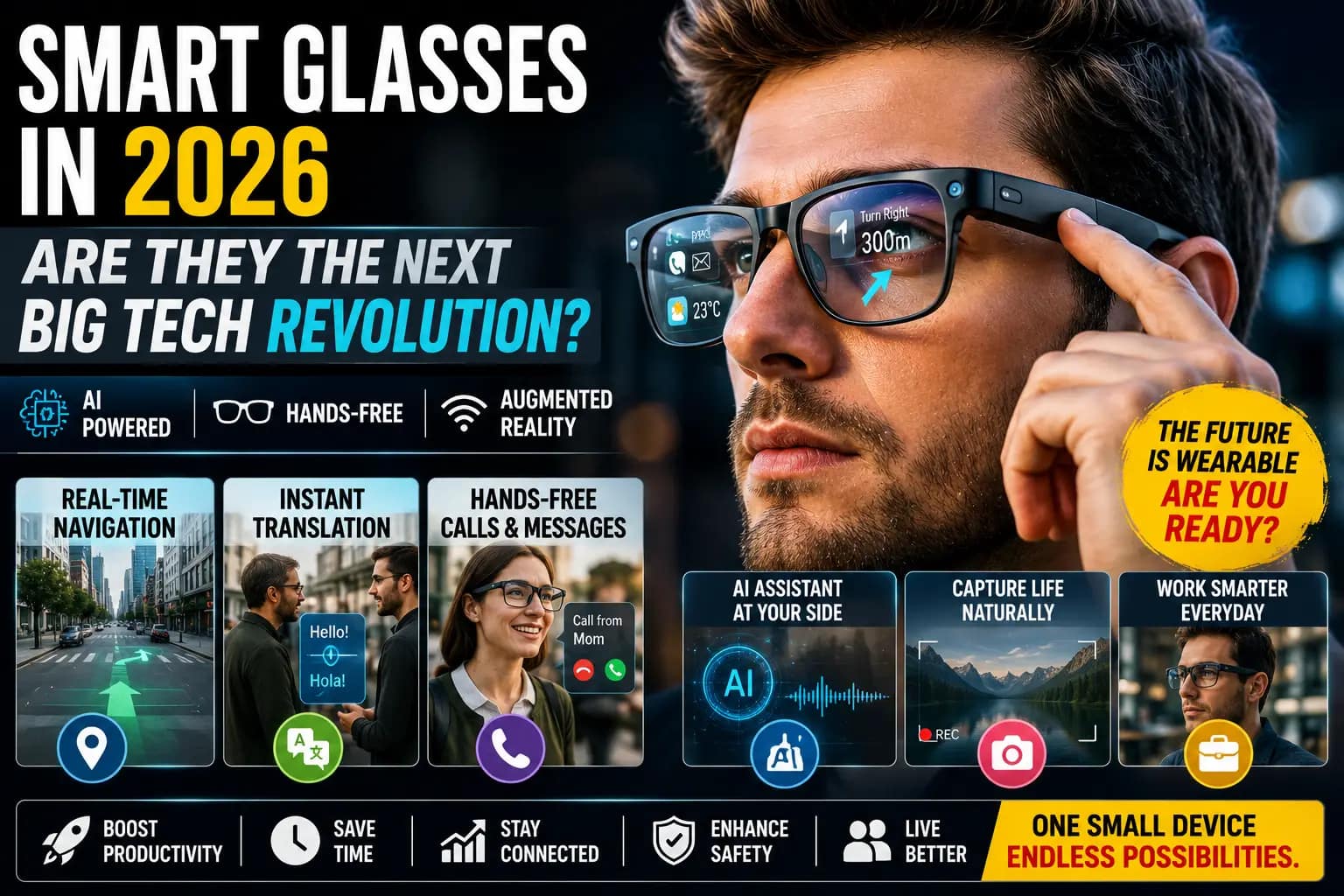
Depending on the model, smart glasses can provide:
- Notifications
- Voice assistance
- Navigation
- Augmented reality features
- Photography and video recording
- Real-time information
Some devices display digital content directly within the user’s field of view, while others focus on audio, cameras, and AI-powered assistance.
The goal is to make technology more accessible without constantly looking at a smartphone screen.
Why Smart Glasses Are Receiving Attention in 2026
Several developments have increased interest in smart glasses.
Artificial Intelligence Integration
AI has dramatically improved the usefulness of wearable devices.
Modern smart glasses can:
- Answer questions
- Translate languages
- Identify objects
- Provide navigation assistance
- Deliver contextual information
AI makes smart glasses feel more practical and intelligent than earlier versions.
Improved Design
One major criticism of older smart glasses was appearance.
Many early devices looked unusual and attracted unwanted attention.
Modern smart glasses are becoming:
- Lighter
- Smaller
- More stylish
- More comfortable
Manufacturers understand that consumers want wearable technology that looks normal.
Better Battery Technology
Battery improvements have increased usability.
Users expect wearable devices to last throughout the day.
While battery life remains a challenge, significant progress has been made compared to earlier generations.
Key Features of Modern Smart Glasses
Real-Time Navigation
Walking through an unfamiliar city becomes easier when directions appear directly in front of you.
Instead of constantly checking a phone, users can receive guidance naturally while moving.
Instant Language Translation
Language barriers remain a challenge for travelers.
Modern smart glasses can help by providing real-time translation support.
This technology has the potential to improve communication between people from different countries.
Hands-Free Communication
Many users appreciate the ability to:
- Answer calls
- Receive messages
- Access information
without reaching for a phone.
This convenience can be especially useful while driving, exercising, or multitasking.
AI-Powered Assistance
Smart glasses increasingly function as personal assistants.
Users can ask questions about:
- Locations
- Objects
- Directions
- Tasks
- Schedules
AI helps deliver information instantly.
How Smart Glasses Could Change Everyday Life
Technology becomes revolutionary when it changes behavior.
Smart glasses have the potential to affect several aspects of daily life.
Education
Students could access educational content while learning.
Interactive visual experiences may improve understanding.
Travel
Navigation and translation features can simplify international travel.
Tourists may receive information about landmarks in real time.
Healthcare
Healthcare professionals may use smart glasses to access information during procedures or consultations.
This could improve efficiency and decision-making.
Work and Productivity
Employees could receive information without interrupting workflows.
Industries such as manufacturing, logistics, and engineering may benefit significantly.
Advantages of Smart Glasses
Greater Convenience
Information becomes accessible without constantly using a smartphone.
Improved Productivity
Quick access to data can reduce interruptions.
Better Accessibility
Certain features may assist users with disabilities or communication challenges.
Enhanced Experiences
Augmented reality can create more immersive interactions.
Challenges Smart Glasses Still Face
Despite progress, several obstacles remain.
Privacy Concerns
Built-in cameras raise concerns about recording and surveillance.
Privacy remains one of the biggest discussions surrounding wearable technology.
Cost
Advanced smart glasses can still be expensive.
Mass adoption may require more affordable pricing.
Battery Limitations
Battery technology continues improving, but power consumption remains a challenge.
Social Acceptance
Consumers must feel comfortable wearing smart glasses in public.
Adoption often depends on both functionality and cultural acceptance.
Could Smart Glasses Replace Smartphones?
This is one of the most common questions.
The answer is probably not yet.
Smartphones remain extremely versatile and familiar.
However, smart glasses could reduce smartphone usage by handling certain tasks such as:
- Navigation
- Messaging
- Information searches
- Voice interactions
Many experts believe the future may involve smartphones and smart glasses working together rather than one completely replacing the other.
What Industry Experts Expect
Technology companies continue investing heavily in:
- Augmented reality
- Wearable computing
- Artificial intelligence
- Miniaturized hardware
Many analysts believe smart glasses represent an important step toward more immersive computing experiences.
Although widespread adoption may take time, the technology appears to be moving in that direction.
Practical Buying Considerations
If you’re considering smart glasses in 2026, think about:
Your Needs
Will you actually use the features regularly?
Battery Life
Check real-world battery performance.
Comfort
Wearable technology should be comfortable for long periods.
Privacy Features
Understand how cameras and data collection work.
Software Support
Strong software ecosystems improve long-term value.
FAQ
1. What are smart glasses used for?
Smart glasses provide features such as navigation, communication, AI assistance, augmented reality, and real-time information.
2. Are smart glasses worth buying in 2026?
For technology enthusiasts and users who value hands-free convenience, they can be a worthwhile investment.
3. Can smart glasses replace smartphones?
Not completely. However, they can reduce dependence on smartphones for certain tasks.
4. Are smart glasses expensive?
Many advanced models remain premium products, although prices are gradually becoming more competitive.
5. Will smart glasses become mainstream?
Many experts believe smart glasses have strong long-term potential as technology continues improving.
Conclusion
Smart glasses have evolved significantly from their early experimental days. Improvements in AI, design, battery life, and usability have made them far more practical in 2026.
While they are not yet ready to replace smartphones, they offer a glimpse into the future of wearable technology. Features such as real-time translation, navigation, AI assistance, and augmented reality could eventually become part of everyday life.
Whether smart glasses become the next major tech revolution remains to be seen, but one thing is clear: the technology is advancing rapidly, and the future looks increasingly wearable.
Related Resources
Yentice.me
https://yentice.me/
MegaDealsHub24
https://megadealshub24.blogspot.com/?m=1
About the Author