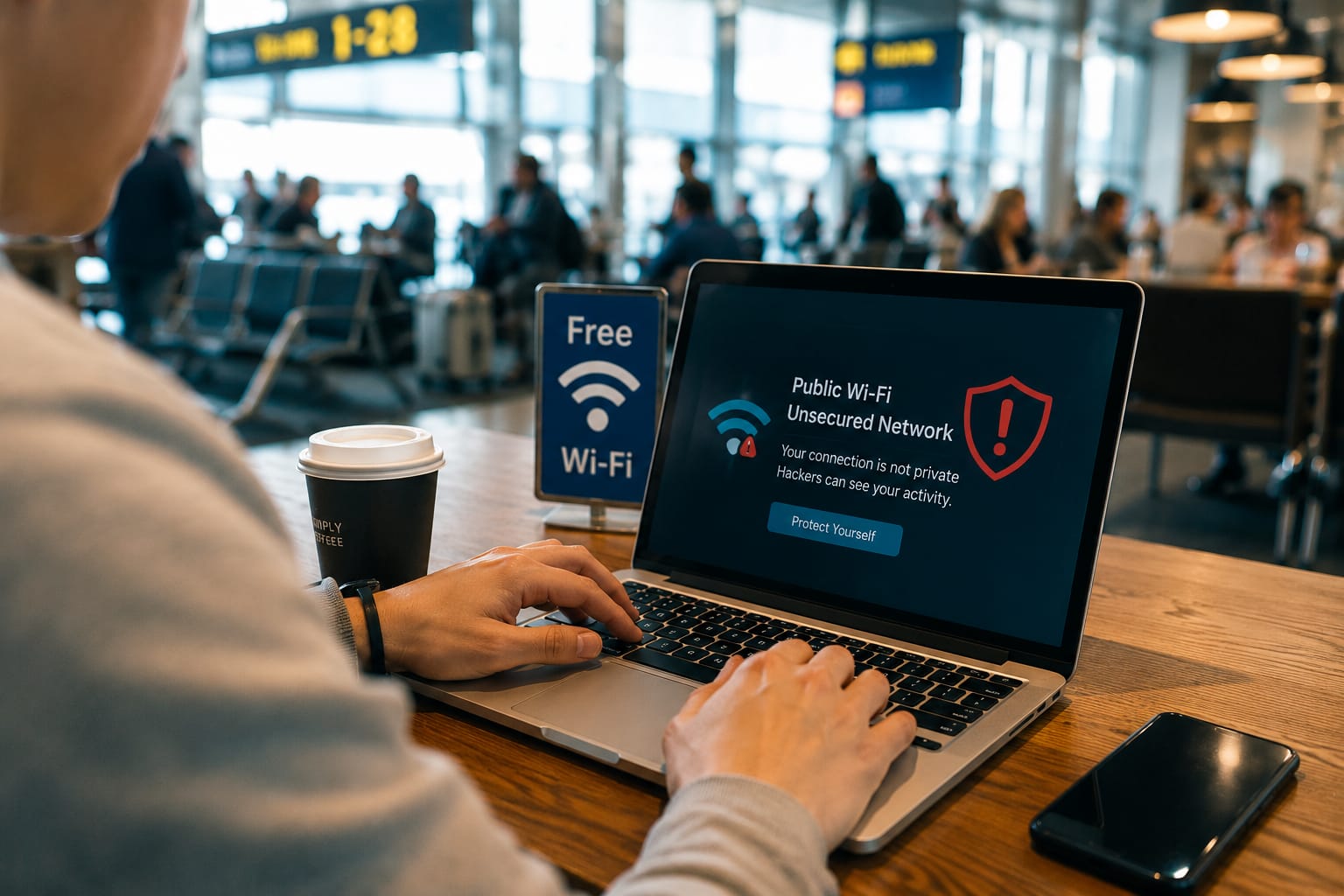
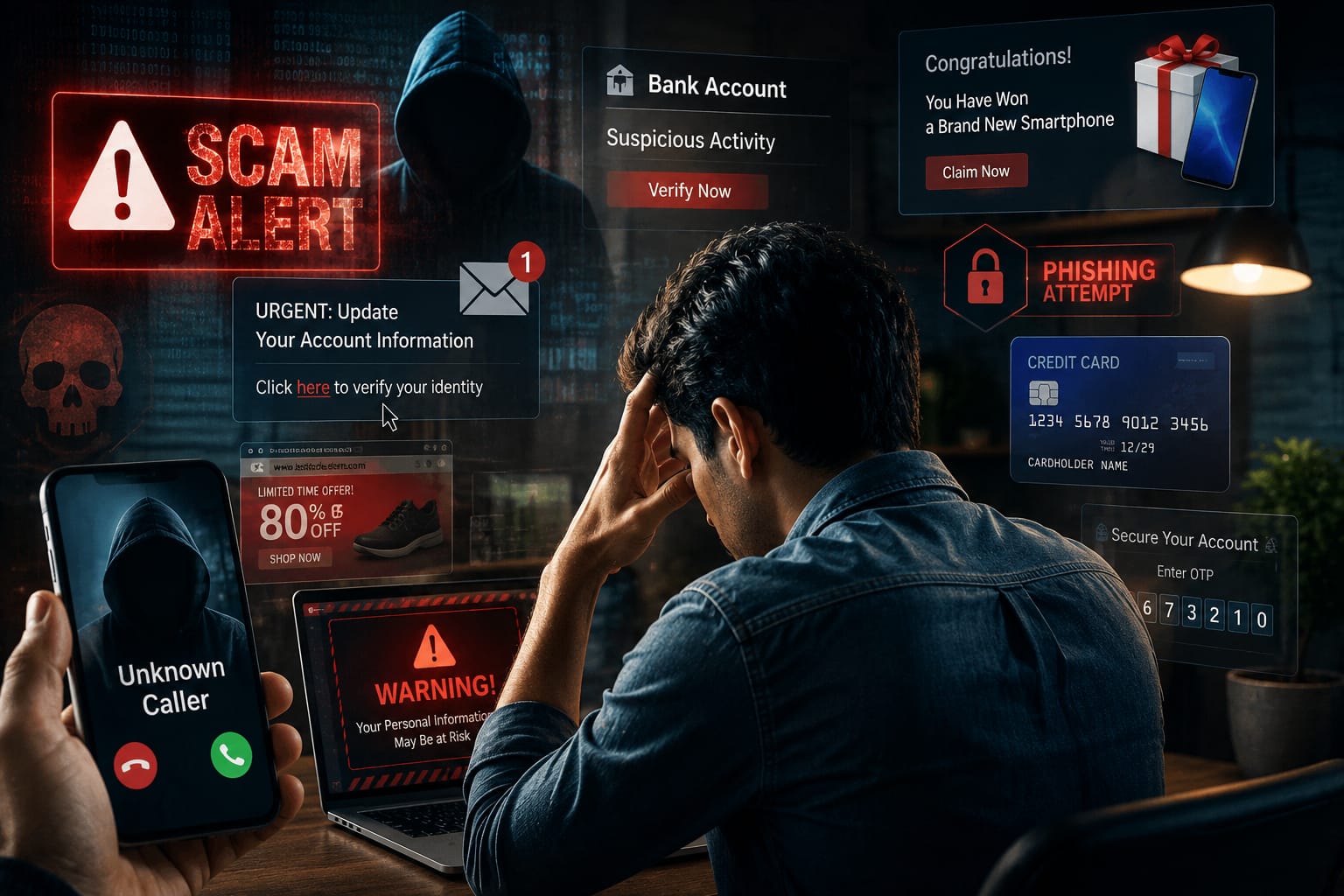
Online scams are becoming increasingly sophisticated in 2026, using phishing emails, fake investment opportunities, suspicious phone calls, and social engineering tactics to target victims.
As technology continues to evolve, so do the tactics used by cybercriminals.
From fake shopping websites to AI-generated voice scams, online fraud has become more convincing than ever. Many scams no longer contain obvious spelling mistakes or suspicious messages. Instead, they often appear professional, urgent, and trustworthy.
Unfortunately, this makes it easier for people to become victims.
The good news is that understanding how modern scams work can dramatically reduce your risk.
Here are some of the most common online scams in 2026 and the practical steps you can take to stay safe.
1. AI Voice Cloning Scams
Artificial intelligence has made it possible to imitate a person’s voice with surprising accuracy.
Scammers may use short audio clips taken from social media videos or public recordings to create fake voice messages.
Victims often receive urgent calls that appear to come from:
- Family members
- Friends
- Colleagues
- Business partners
The caller may claim to need money immediately due to an emergency.
How to Avoid It
- Verify requests through another communication method.
- Create family verification phrases.
- Never send money based solely on a phone call.
2. Fake Online Shopping Stores
Cybercriminals frequently create professional-looking websites that offer products at unusually low prices.
Common warning signs include:
- Unrealistic discounts
- Limited contact information
- No customer reviews
- Recently created websites
Many victims either receive counterfeit products or nothing at all.
How to Avoid It
- Research unfamiliar stores.
- Check independent reviews.
- Use secure payment methods.
- Be cautious of prices that seem too good to be true.
3. Phishing Emails
Phishing remains one of the most effective scams because it targets human behavior rather than technology.
Scammers often pretend to be:
- Banks
- Delivery companies
- Government agencies
- Popular online services
Their goal is to steal login credentials or financial information.
How to Avoid It
- Check sender addresses carefully.
- Avoid clicking suspicious links.
- Log in directly through official websites.
4. Investment and Cryptocurrency Scams
Fraudulent investment opportunities continue to attract victims by promising quick profits.
These scams often use:
- Fake success stories
- Celebrity endorsements
- Guaranteed returns
Legitimate investments always involve risk.
How to Avoid It
- Research thoroughly before investing.
- Verify platforms independently.
- Avoid offers promising guaranteed profits.
5. QR Code Scams
QR codes are now widely used for payments, menus, tickets, and promotions.
Scammers sometimes replace legitimate QR codes with malicious versions that redirect users to fake websites.
How to Avoid It
- Inspect QR codes before scanning.
- Verify website addresses after scanning.
- Avoid entering sensitive information on unfamiliar websites.
6. Social Media Giveaway Scams
Fake giveaways continue to spread across social media platforms.
Scammers often claim that users have won:
- Smartphones
- Gift cards
- Cash prizes
- Luxury products
Victims are then asked to provide personal information or pay small processing fees.
How to Avoid It
- Verify promotions through official accounts.
- Avoid paying fees to claim prizes.
- Be skeptical of unexpected winnings.
Why Scams Are Becoming More Convincing
Modern scammers increasingly use:
- Artificial intelligence
- Professional website templates
- Automated messaging tools
- Stolen personal information
As a result, scams often look remarkably authentic.
Awareness has become one of the most important cybersecurity skills.
Essential Online Safety Tips
Regardless of the scam type, these habits can significantly improve your security:
Use Strong Passwords
Avoid reusing passwords across multiple accounts.
Enable Two-Factor Authentication
This adds an extra layer of protection.
Verify Before Trusting
Always confirm unusual requests.
Keep Software Updated
Security updates often fix vulnerabilities.
Think Before You Click
Taking a few extra seconds can prevent costly mistakes.
FAQ
What is the most dangerous online scam in 2026?
AI voice cloning scams are among the fastest-growing threats because they exploit trust and urgency.
Are phishing emails still effective?
Yes. They remain one of the most common methods used by cybercriminals.
How can I tell if a website is fake?
Check reviews, contact information, website age, and payment security before purchasing.
Should I trust QR codes?
Only when they come from trusted sources and lead to verified websites.
What is the best defense against scams?
Awareness, caution, and verifying information before taking action.
Conclusion
Online scams are becoming smarter, faster, and more convincing every year.
While technology has made life more convenient, it has also created new opportunities for cybercriminals.
Fortunately, most scams share common warning signs.
By staying informed, verifying suspicious requests, and following basic cybersecurity practices, you can dramatically reduce your chances of becoming a victim.
In 2026, the most valuable security tool isn’t software.
It’s awareness.
About the Author