Introduction
For years, apps have been the center of our digital lives.
Whether ordering food, booking a ride, editing photos, shopping online, or managing finances, people rely on apps for almost everything. Smartphones today contain dozens of applications, and many users switch between them countless times each day.
But a new technological shift is beginning to emerge.
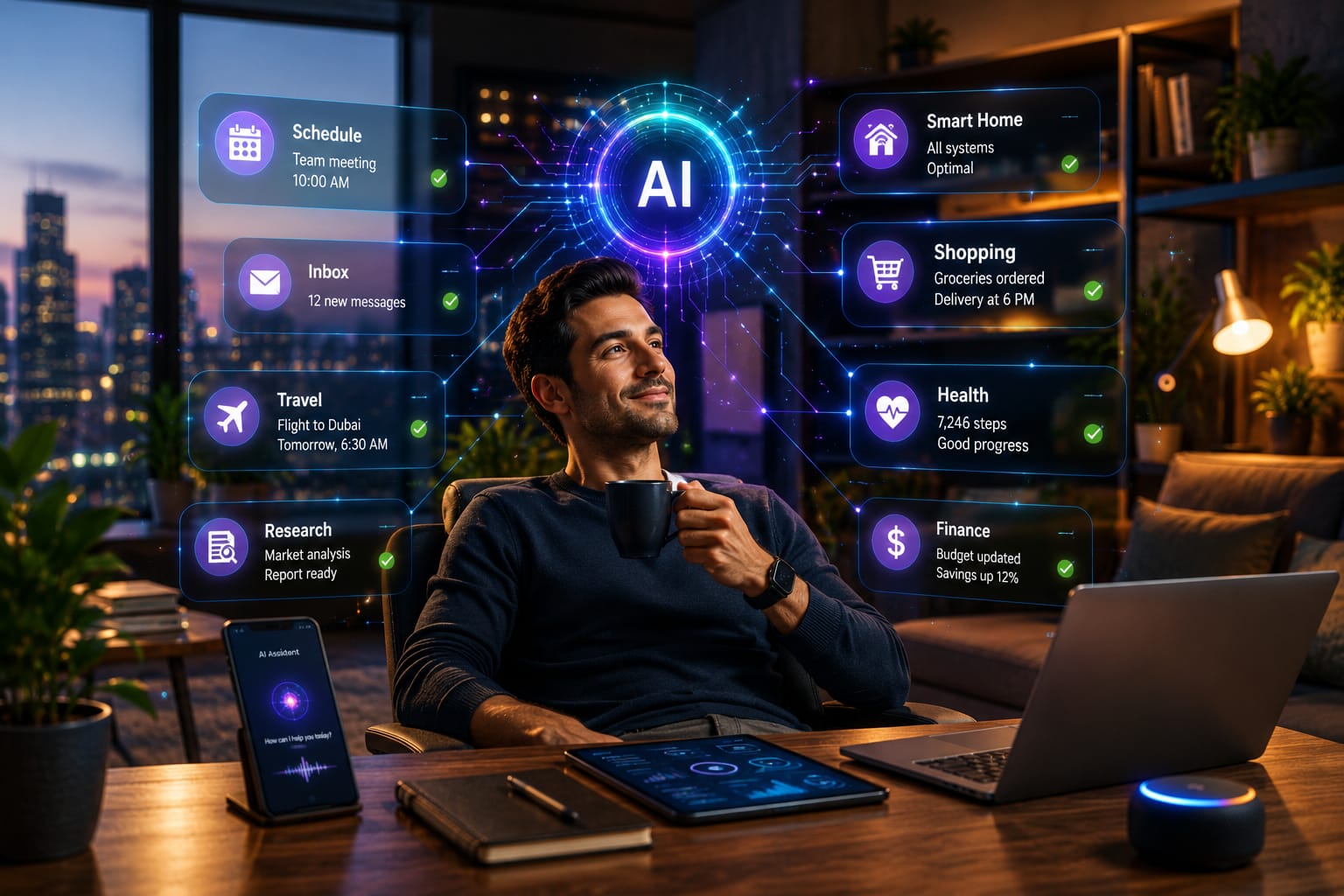
Instead of opening multiple apps and manually completing tasks, future users may simply tell an AI agent what they want, and the agent will handle everything automatically.
Imagine saying:
“Book me the cheapest flight for next weekend, reserve a hotel near the city center, and add the itinerary to my calendar.”
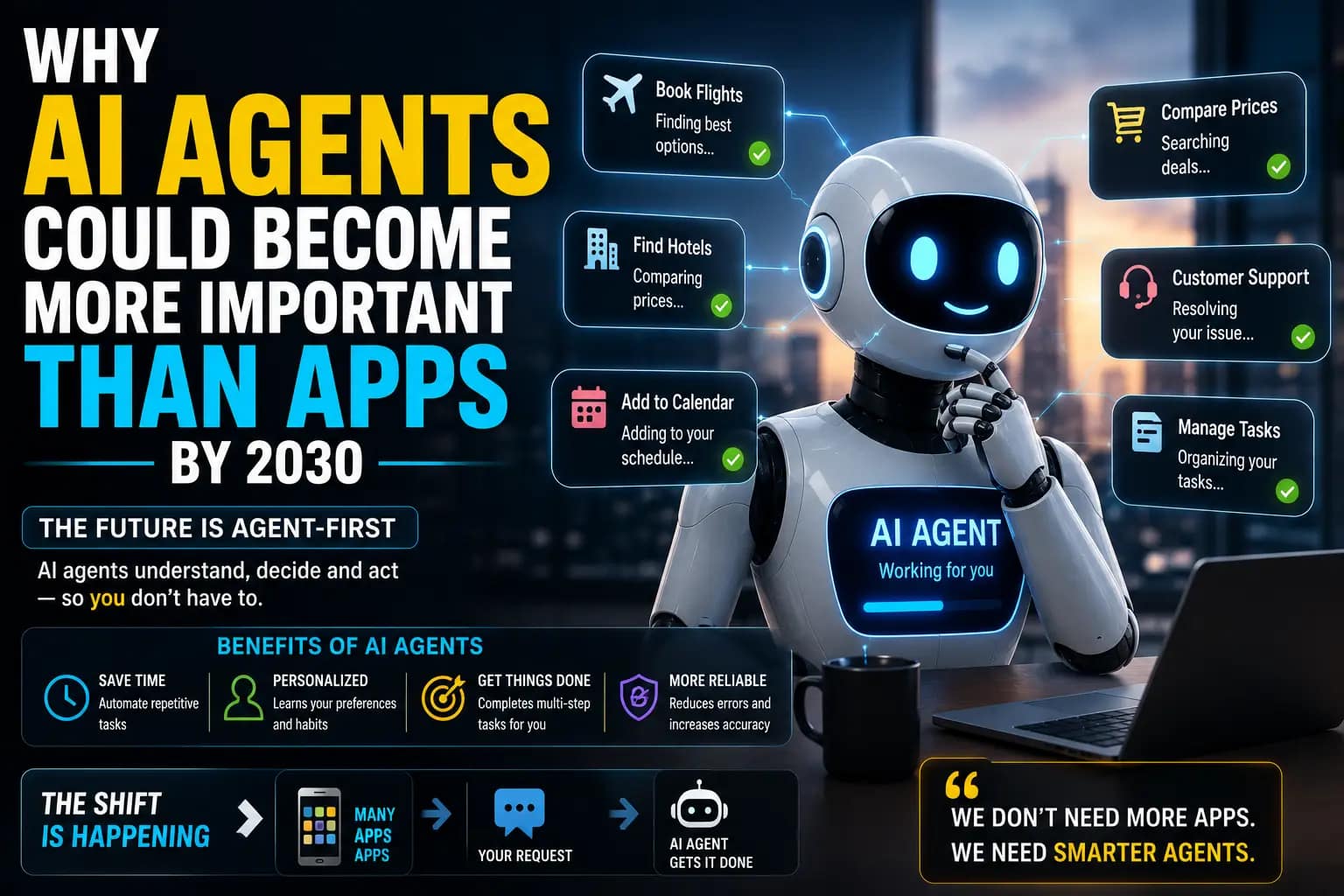
Instead of opening five different apps, a single AI agent could complete the entire process.
This possibility is why many technology experts believe AI agents could become one of the most important technology trends of the next decade.
The simple answer is this:
AI agents are designed to perform tasks on behalf of users, potentially reducing the need to interact directly with individual apps and creating a more automated digital experience.
What Is an AI Agent?
An AI agent is an intelligent software system capable of understanding instructions, making decisions, and completing tasks with minimal human involvement.
Unlike traditional software that follows fixed commands, AI agents can:
- Understand natural language
- Learn user preferences
- Perform multi-step tasks
- Access information
- Make recommendations
The goal is to act more like a digital assistant than a traditional application.
How AI Agents Differ From Apps
Traditional Apps
Apps require users to:
- Open the application
- Navigate menus
- Enter information
- Complete actions manually
AI Agents
AI agents aim to:
- Understand goals
- Execute tasks automatically
- Coordinate across services
- Reduce manual effort
This creates a more streamlined experience.
Why Technology Companies Are Investing in AI Agents
Major technology companies believe AI agents could represent the next evolution of computing.
Several factors are driving investment:
Improved AI Capabilities
Modern AI systems are becoming more accurate and useful.
Growing Demand for Automation
People increasingly want technology that saves time.
Better Personalization
AI agents can adapt to individual preferences.
Productivity Benefits
Businesses see opportunities to improve efficiency.
Everyday Tasks AI Agents Could Handle
Travel Planning
An AI agent could:
- Compare flights
- Find hotels
- Organize schedules
without requiring users to visit multiple websites.
Shopping Assistance
Agents could:
- Compare prices
- Track discounts
- Recommend products
based on personal preferences.
Productivity Management
Future AI agents may:
- Organize calendars
- Schedule meetings
- Prioritize tasks
- Send reminders
automatically.
Customer Support
AI agents could resolve common issues without long waiting times.
Benefits of AI Agents
Save Time
Automation reduces repetitive work.
Improved Convenience
Users interact through natural language.
Personalized Experiences
Agents learn preferences over time.
Increased Productivity
Many routine tasks can be completed faster.
Challenges AI Agents Must Overcome
Despite their promise, AI agents still face obstacles.
Privacy Concerns
Users need confidence that personal information remains secure.
Accuracy
Mistakes can create frustration.
Trust
People must feel comfortable allowing AI systems to make decisions.
Regulation
Governments and businesses continue developing policies for AI usage.
Could AI Agents Replace Apps?
Not completely.
Apps will likely continue existing, but users may interact with them differently.
Instead of manually opening applications, AI agents could become a layer that sits above them and coordinates tasks automatically.
Many experts believe the future may involve:
Users → AI Agent → Apps
rather than:
Users → Individual Apps
Industries Most Likely to Change
AI agents could significantly influence:
- Healthcare
- Finance
- Education
- Customer service
- E-commerce
- Productivity software
The impact could be similar to how smartphones changed digital experiences.
What This Means for Everyday Users
For consumers, the biggest benefit is simplicity.
Rather than learning dozens of interfaces and applications, users may simply communicate goals.
Technology becomes less about navigating software and more about achieving results.
FAQ
1. What is an AI agent?
An AI agent is software that can understand instructions, make decisions, and complete tasks automatically.
2. Are AI agents different from chatbots?
Yes. AI agents can perform actions and complete tasks, while many chatbots primarily provide information.
3. Will AI agents replace mobile apps?
Probably not entirely, but they may reduce direct interaction with many apps.
4. Why are AI agents important?
They can automate complex tasks and improve productivity.
5. When could AI agents become mainstream?
Many experts expect adoption to grow significantly over the next several years.
Conclusion
AI agents represent one of the most exciting developments in modern technology. By combining artificial intelligence, automation, and personalization, they could fundamentally change how people interact with digital services.
While challenges remain, the potential benefits are enormous. If current trends continue, AI agents may become just as important as smartphones and apps are today.
The future of technology may not be about using more apps—it may be about needing fewer of them.
About the Author