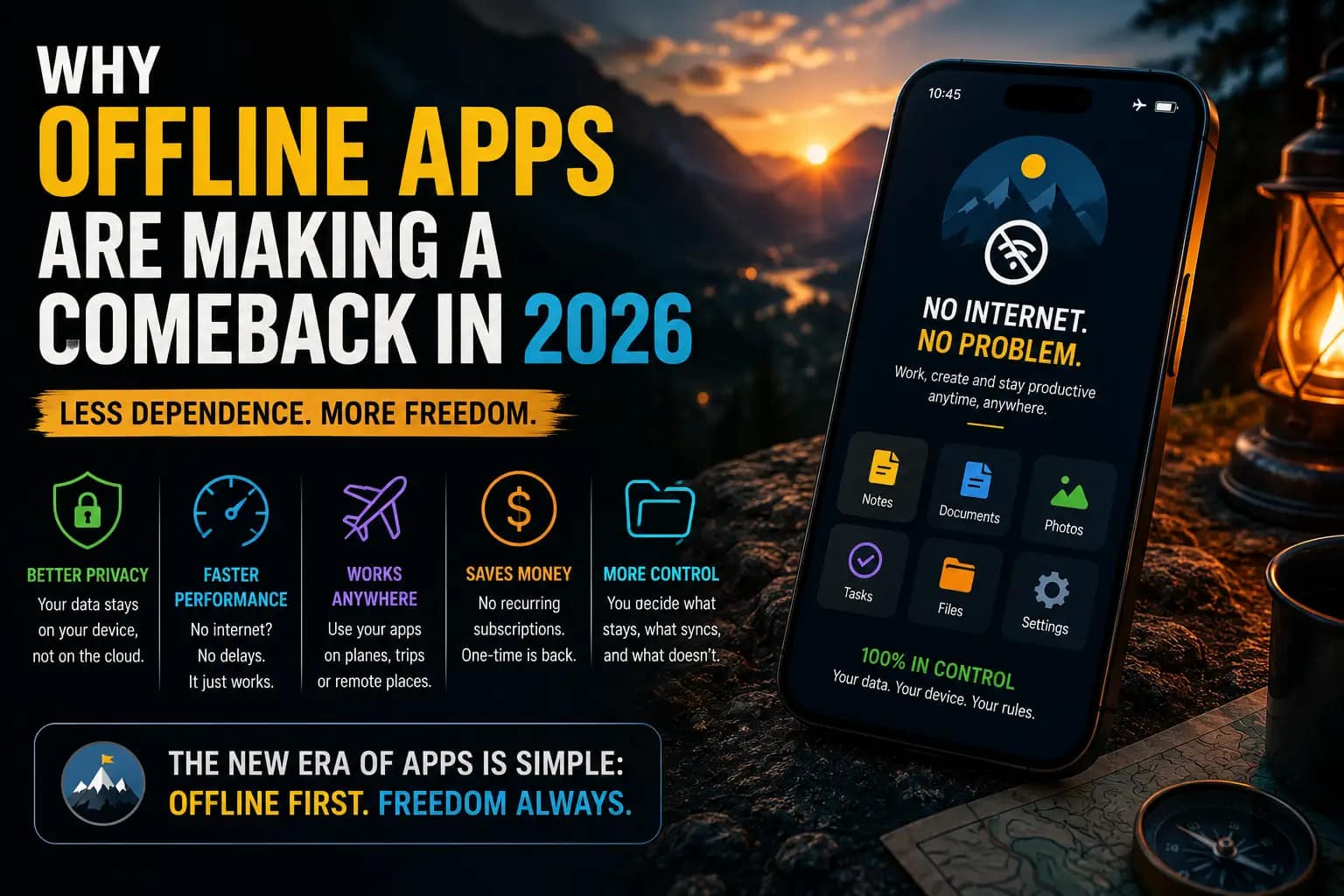
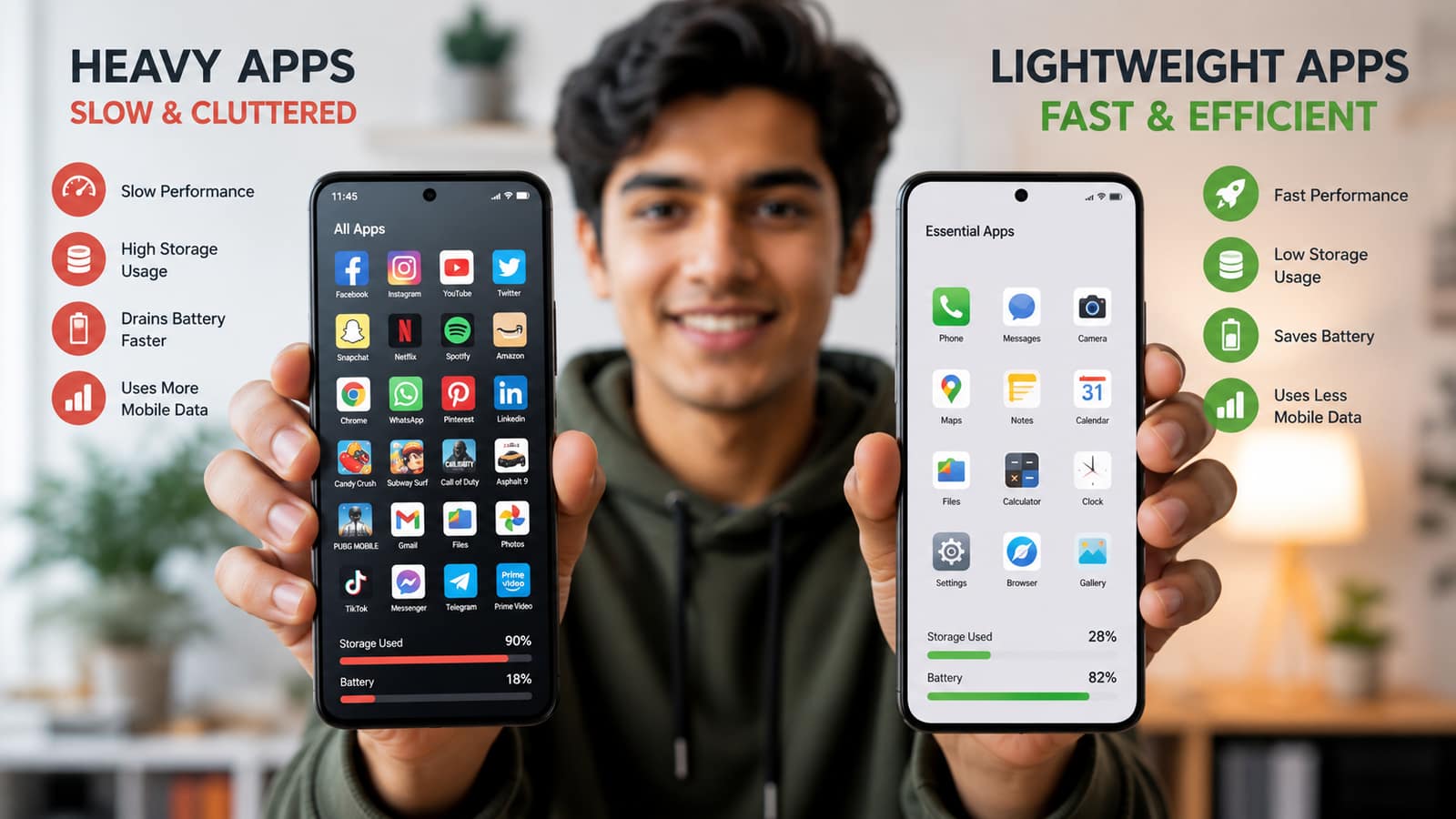
Lightweight apps are gaining popularity because they offer faster performance, lower storage usage, better battery efficiency, and a smoother mobile experience.
A few years ago, bigger apps seemed better.
Every new update added more features, more animations, more integrations, and more background processes. While these additions often improved functionality, they also made apps larger, slower, and more demanding on smartphones.
Today, a surprising trend is emerging.
In 2026, lightweight apps are making a strong comeback.
Many users are actively searching for faster, simpler, and more efficient alternatives to feature-heavy applications. Developers are also recognizing that not everyone wants apps that consume large amounts of storage, battery life, and mobile data.
The growing popularity of lightweight apps reflects a broader shift toward speed, simplicity, and better user experiences.
Let’s explore why these apps are becoming increasingly popular and what this trend means for smartphone users.
What Are Lightweight Apps?
Lightweight apps are applications designed to use fewer device resources.
Compared to traditional apps, they typically require:
- Less storage space
- Less RAM
- Less battery power
- Less mobile data
Their primary goal is efficiency rather than feature overload.
Many lightweight apps focus on delivering core functionality without unnecessary extras.
Why Users Are Returning to Lightweight Apps
The answer is simple.
Many people are tired of apps becoming larger and more complicated every year.
Users increasingly value:
- Faster performance
- Better battery life
- Simpler interfaces
- Reduced storage usage
For everyday tasks, many users don’t need dozens of advanced features.
They simply want apps that work reliably.
Storage Space Is Still Important
Although smartphones now offer larger storage capacities, storage remains a concern.
Photos, videos, games, and downloads quickly consume available space.
Large applications can occupy hundreds of megabytes—or even several gigabytes.
Lightweight apps help users:
- Save storage space
- Reduce clutter
- Keep devices running smoothly
This is especially valuable for budget and mid-range smartphones.
Better Performance on Older Devices
Not everyone upgrades their phone every year.
Millions of people continue using devices that are several years old.
Heavy applications can slow older phones significantly.
Lightweight apps often provide:
- Faster launch times
- Smoother performance
- Improved responsiveness
As a result, users can extend the life of their devices.
Improved Battery Life
Battery performance remains one of the biggest smartphone concerns.
Many modern apps constantly run background processes that consume power.
Lightweight apps are generally designed to be more efficient.
Benefits may include:
- Reduced background activity
- Lower processor usage
- Better battery longevity
For frequent travelers and heavy smartphone users, this can make a noticeable difference.
Faster Mobile Experiences
Speed matters.
Research consistently shows that users prefer applications that open quickly and respond instantly.
Lightweight apps often:
- Load faster
- Use fewer resources
- Deliver smoother experiences
Even small improvements in speed can significantly improve user satisfaction.
Reduced Mobile Data Usage
Mobile data is still limited or expensive in many regions.
Large apps often consume additional bandwidth through:
- Automatic updates
- Background syncing
- High-resolution content
Lightweight apps typically minimize unnecessary data usage.
This makes them attractive for users who want to reduce mobile expenses.
Simplicity Is Becoming Trendy Again
Modern software sometimes suffers from feature overload.
As applications evolve, they often become cluttered with tools that many users rarely use.
In contrast, lightweight apps focus on:
- Clean interfaces
- Essential features
- Faster navigation
This minimalist approach is becoming increasingly appealing.
Businesses Are Paying Attention
Software companies are noticing changing user preferences.
Many developers now prioritize:
- Performance optimization
- Faster load times
- Lower resource consumption
- Better mobile experiences
Some companies are even releasing lighter versions of existing applications to meet growing demand.
The Role of AI in App Optimization
Artificial intelligence is helping developers create more efficient software.
AI-powered optimization can:
- Reduce unnecessary processes
- Improve performance
- Manage battery consumption
- Enhance user experiences
Ironically, AI may help create smaller and faster applications rather than larger ones.
Who Benefits Most From Lightweight Apps?
Students
Students often use budget-friendly devices and limited data plans.
Travelers
Reduced battery and data consumption are major advantages.
Business Professionals
Faster applications improve productivity.
Older Smartphone Users
Lightweight apps help extend device usability.
Everyday Users
Most users simply appreciate speed and simplicity.
Challenges of Lightweight Apps
Despite their advantages, lightweight apps may have limitations.
Fewer Features
Some advanced functionality may be unavailable.
Limited Customization
Lightweight apps often prioritize simplicity.
Reduced Integrations
Certain third-party connections may be missing.
For many users, however, these trade-offs are acceptable.
The Future of Lightweight Software
Industry experts expect efficiency-focused software development to continue growing.
Future trends may include:
- Smarter optimization
- Faster performance
- Reduced energy consumption
- Better mobile experiences
- AI-assisted efficiency improvements
As consumers prioritize speed and usability, lightweight software could become a major competitive advantage.
FAQ
1. What is a lightweight app?
A lightweight app is software designed to use fewer system resources, storage, battery power, and mobile data.
2. Are lightweight apps faster?
In many cases, yes. They often launch and operate more quickly than larger applications.
3. Do lightweight apps have fewer features?
Sometimes. They usually focus on essential functionality rather than feature overload.
4. Are lightweight apps good for older phones?
Yes. They often improve performance on aging devices.
5. Why are lightweight apps popular again?
Users increasingly value speed, simplicity, battery efficiency, and reduced storage usage.
Conclusion
Technology trends often move in cycles.
For years, applications became larger and more feature-packed. While innovation remains important, many users are now rediscovering the benefits of simplicity.
Lightweight apps offer faster performance, better battery life, reduced storage usage, and cleaner user experiences.
As smartphones continue evolving, efficiency may become just as important as adding new features.
In 2026, the growing popularity of lightweight apps shows that sometimes less really is more.
Related Resources
About the Author